
Freelance work feels different this year. AI is reshaping the work itself. This change opens up new ground for writers and creators. The financial stakes are huge, with the AI sector’s value soaring. People with specific AI abilities can find plenty of work.
The hard part is picking a course. You need one that teaches skills clients want now. The right training should lead directly to paid projects. It’s not about collecting certificates. It’s about building capabilities you can immediately translate into client work and higher income.
The following platforms stand out because they deliver specific, actionable training rather than generic theory. They help you move from learning to earning, fast.
Coursiv: Your Daily AI Content Coach
Coursiv.io takes a different approach to skill-building.
Think of it less as a course platform and more as your daily training partner for AI content creation. Coursiv keeps things simple with very short lessons. It turns complicated AI tools into quick, daily phone exercises.
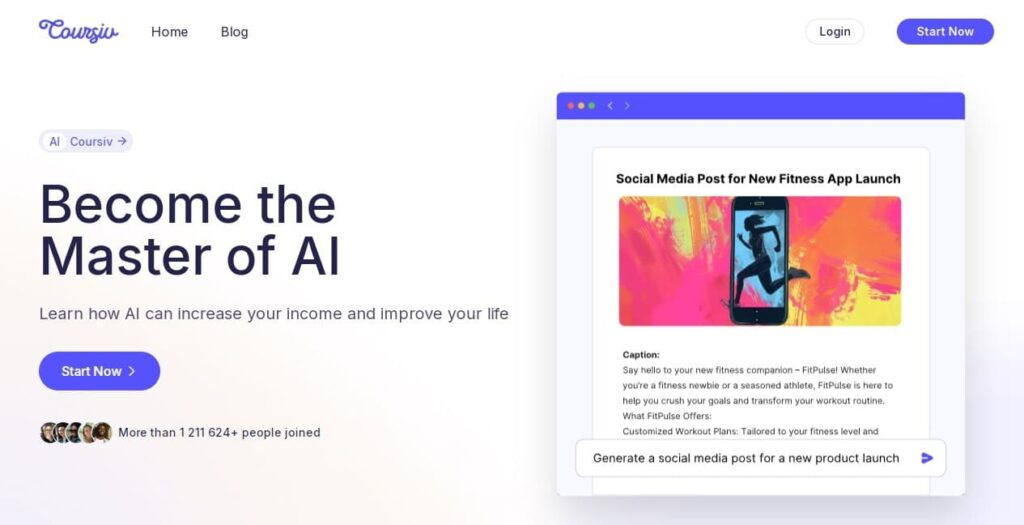
The connection to freelance jobs is clear. You practice with real tasks, building blog ideas and social posts for clients. Doing this every day makes AI writing feel natural and fast.
Paths like “AI Content Creation” guide you through new tools step-by-step. Finishing a challenge earns you a certificate. This shows clients a specific skill you’ve mastered.
Udemy: The Specialized Skills Library
Udemy operates like a massive digital marketplace for practical knowledge. Udemy feels like a giant library where every book is by a different author. No single path guides you through it all. You find thousands of separate courses on any AI topic.
This setup works when a client has a unique problem. Need to understand AI for e-commerce SEO? There’s a cheap course for that. Udemy is great for learning one thing quickly without a big commitment.
Coursera: The Formal Education Path
Coursera lets you take university classes from home. It works with schools like Stanford and companies like Google. This helps if you need a diploma-style certificate for bigger clients.
The classes have real homework and deadlines. Taking a course like “AI For Everyone” gives you a credential for your LinkedIn. It shows you’ve done the formal work.
AI Academy: The Project-Based Intensive
AI Academy skips the long lectures. It throws you into building things. Their programs focus on making real projects, like custom chatbots, during the course.
This style fits freelancers who already know the basics. You learn to create custom AI solutions, not just use them. The group setting lets you connect with others doing the same work.
High-Value Niches for AI Content Freelancers
The freelance market is splitting in two. On one side, generalists compete on price for basic content tasks. Meanwhile, experts who solve tricky problems get paid much more. Smart freelancers are picking their spots. They focus on areas where their deep knowledge makes them the obvious choice.
Writing for AI-Powered Search
This work is more than just finding keywords. Search engines now use AI to judge your writing. Your content needs to work for people and machines.
Freelancers here use AI to find what readers really want to know. They build articles that answer every part of a question. It’s like designing a house specifically for its occupants.
Technical AI Content Creation
Companies face a new problem. Their tech teams build amazing AI, but nobody else gets it. This niche is about being a translator. You turn complex tech talk into stories people enjoy.
Maybe you’ll compare a machine learning model to a chef learning a recipe. Or transform a boring report into a clear blog post. You help everyone get on the same page. Your value lies in being a bilingual interpreter between the technical and the practical.
Prompt Engineering & Optimization
Many freelancers know how to use AI tools. True prompt engineers understand how to control them. This niche involves developing repeatable systems for generating high-quality outputs.
It’s about crafting multi-step prompts that guide an AI through a complex task, creating custom instructions for a consistent brand voice, or building libraries of proven prompts for specific industries. Clients pay a premium for this because it directly impacts the efficiency and quality of their entire content operation. You’re not just a writer; you’re an AI workflow architect.
Industry-Specific AI Content
The application of AI in healthcare looks nothing like its use in finance. This niche is about developing deep expertise in one vertical. A freelancer might specialize in creating compliant, sensitive content for healthcare patients using AI, or generating precise financial market reports.
This requires learning the specific regulations, terminology, and audience concerns of that industry. Your content demonstrates that you don’t just understand AI—you understand their world, and how AI fits safely and effectively within it.
Turning Learning into Earning
Learning something new feels great. Getting a client to write a check for it feels even better. You need to switch your mindset from student to business owner.
Show Your Work, Not Just Results
Make your portfolio tell a story. Don’t just show the final article. Display your process. For an AI SEO piece, include the initial research, the prompts you wrote, and how you polished the draft.
People see how you think. They understand you can guide an AI from start to finish. That’s what they’re really buying.
Develop Service Packages
Clients buy solutions, not loose skills. Packaging your expertise into clear, scoped offerings makes the buying decision easy and positions you as a specialist, not a generalist. Instead of offering “AI writing,” you could sell an “AI-Optimized Blog Post Package” that includes topic clustering analysis, first drafts generated through custom prompts, and human-led optimization for E-E-A-T.
Another package might be “Ongoing SEO Content Strategy,” where you use AI to perform monthly content gap analyses and generate topic briefs. This bundles your skills into tangible outcomes clients understand and are willing to pay for upfront.
Position as a Specialist
Stop trying to talk to everyone. Pick a small group and speak their language. Your services should answer one specific need they have.
Swap “I write AI content” for “I create lead-generating case studies for tech companies.” Or “I write product descriptions that help online stores sell more.” The right clients will know you’re for them. This specific messaging attracts clients who are already looking for your exact skillset and are ready to pay a specialist’s rate.
Final Thoughts: Your Path to AI Freelancing Success
You learn by doing real work on Coursiv. Your portfolio builds itself as you practice. You also get faster, which clients notice and appreciate.
The best freelancers won’t lose their jobs to a machine. They’ll be the ones using it better than anyone else. Picking the right training is how you start participating in the change, not just watching it.